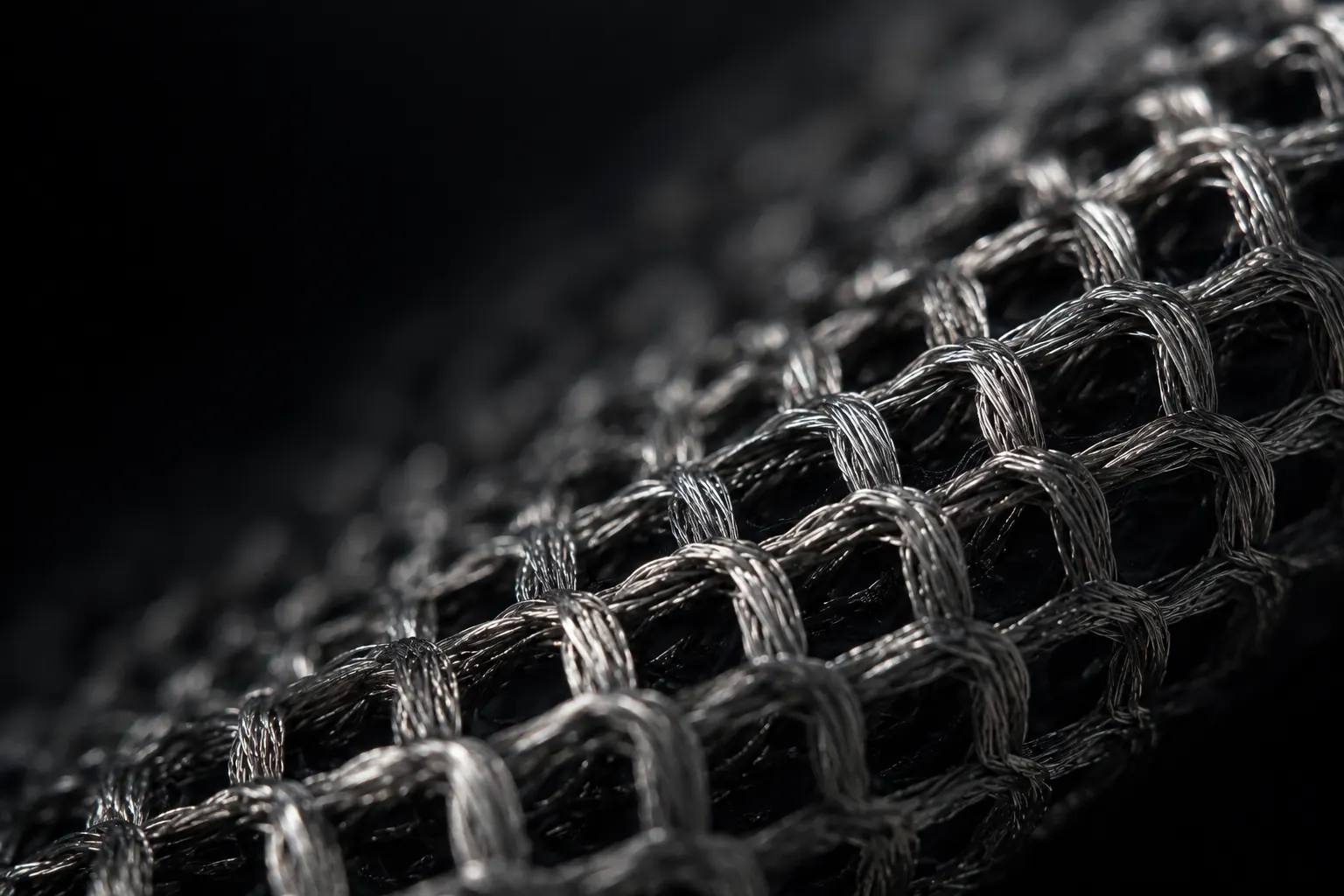
Passive protection against drone threats
Engineered textile solutions for critical infrastructure, civilian assets and defence.
Physical Protection · Camouflage · Signature Management · EMI/RF Shielding
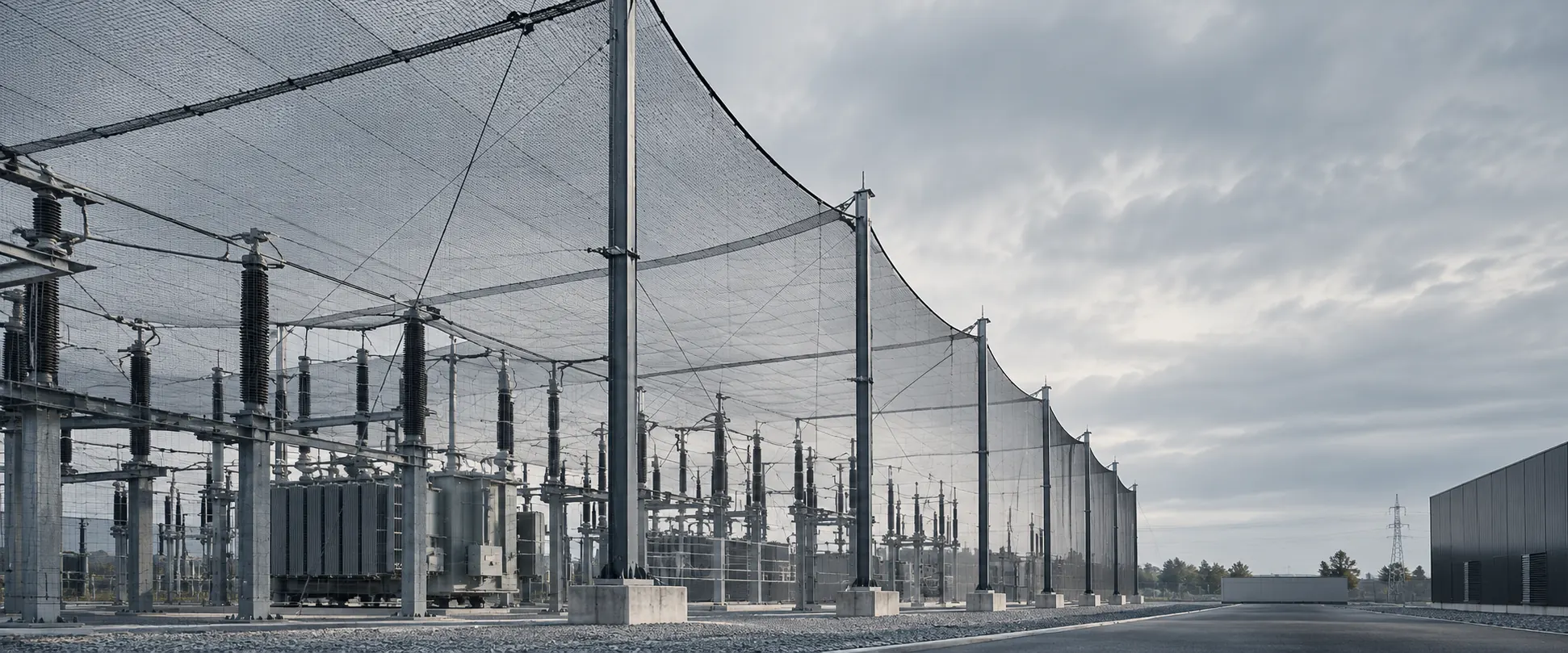
Drone threats go beyond physical attacks.
UAS can create different security challenges depending on the asset, environment and intended use.
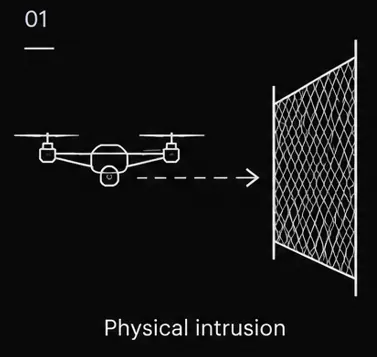
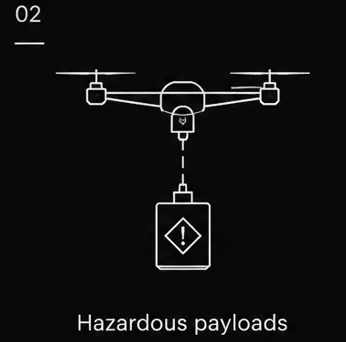
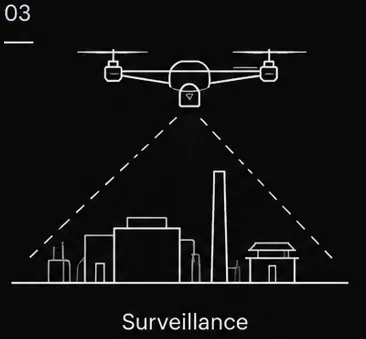
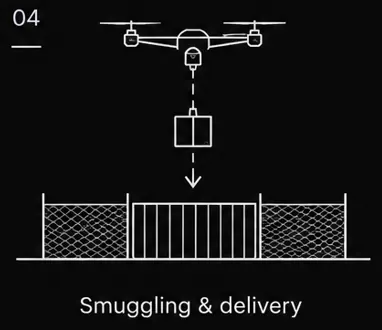

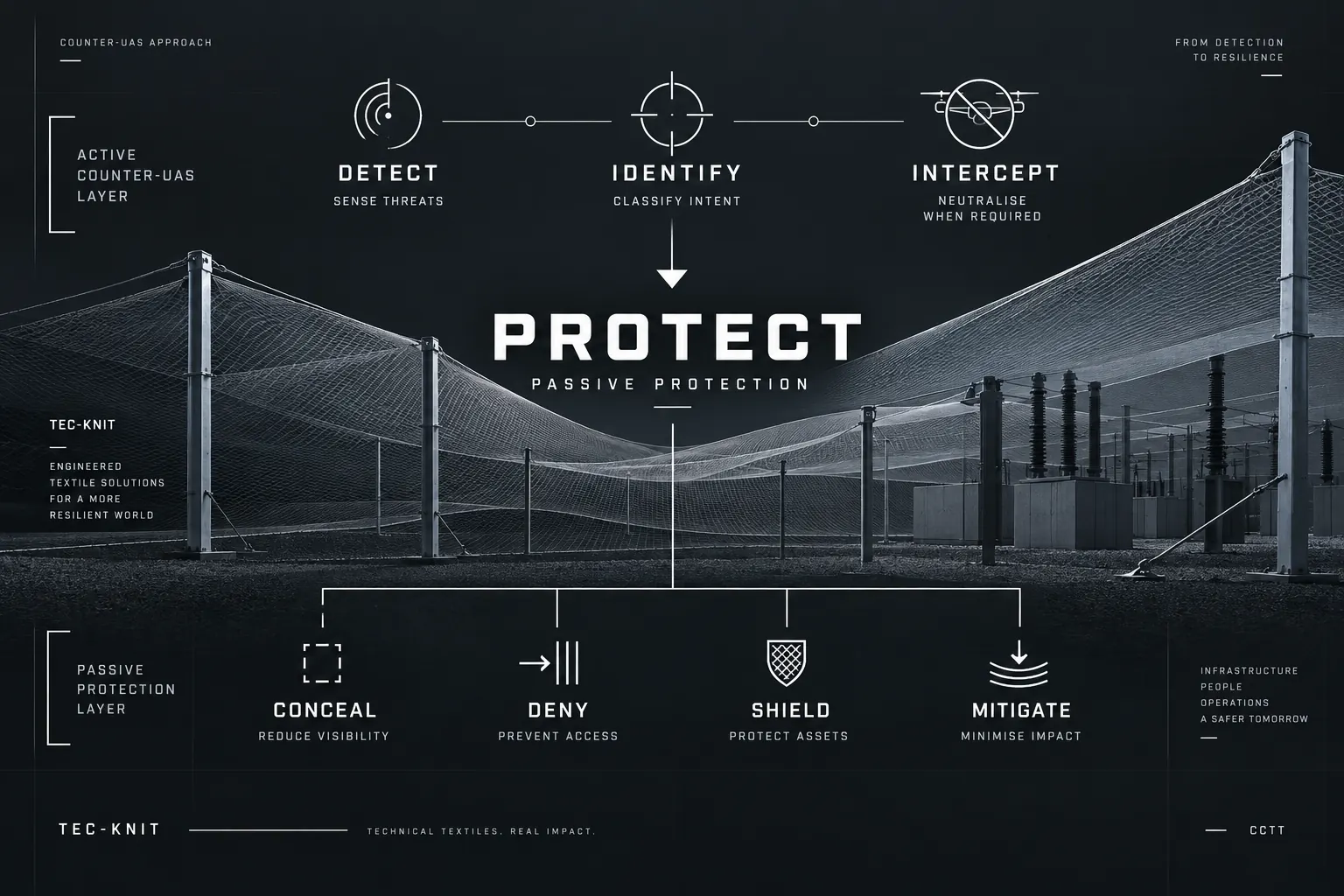
Protection does not end with detection

Active counter-UAS systems can detect, identify and intercept. Passive protection adds another layer, protecting the asset itself.
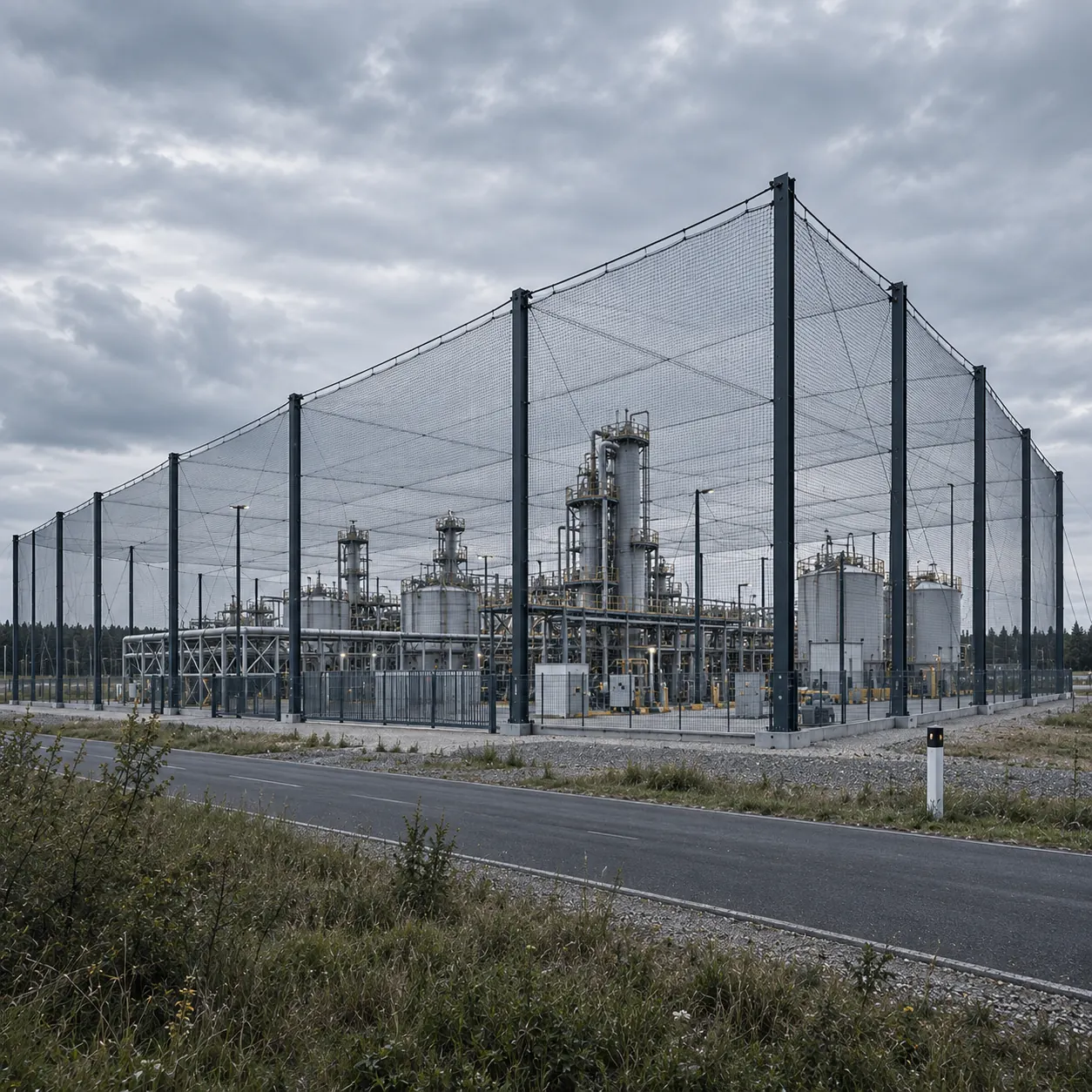
Deny access.
Create distance.
TEC-KNIT develops textile structures for mechanical protection, retention and energy management. These capabilities form the technological basis for passive UAS protection concepts.
KEEP THE THREAT
AWAY FROM THE ASSET
Overhead · Facades · Perimeters
Sensitive Equipment · Temporary Protection
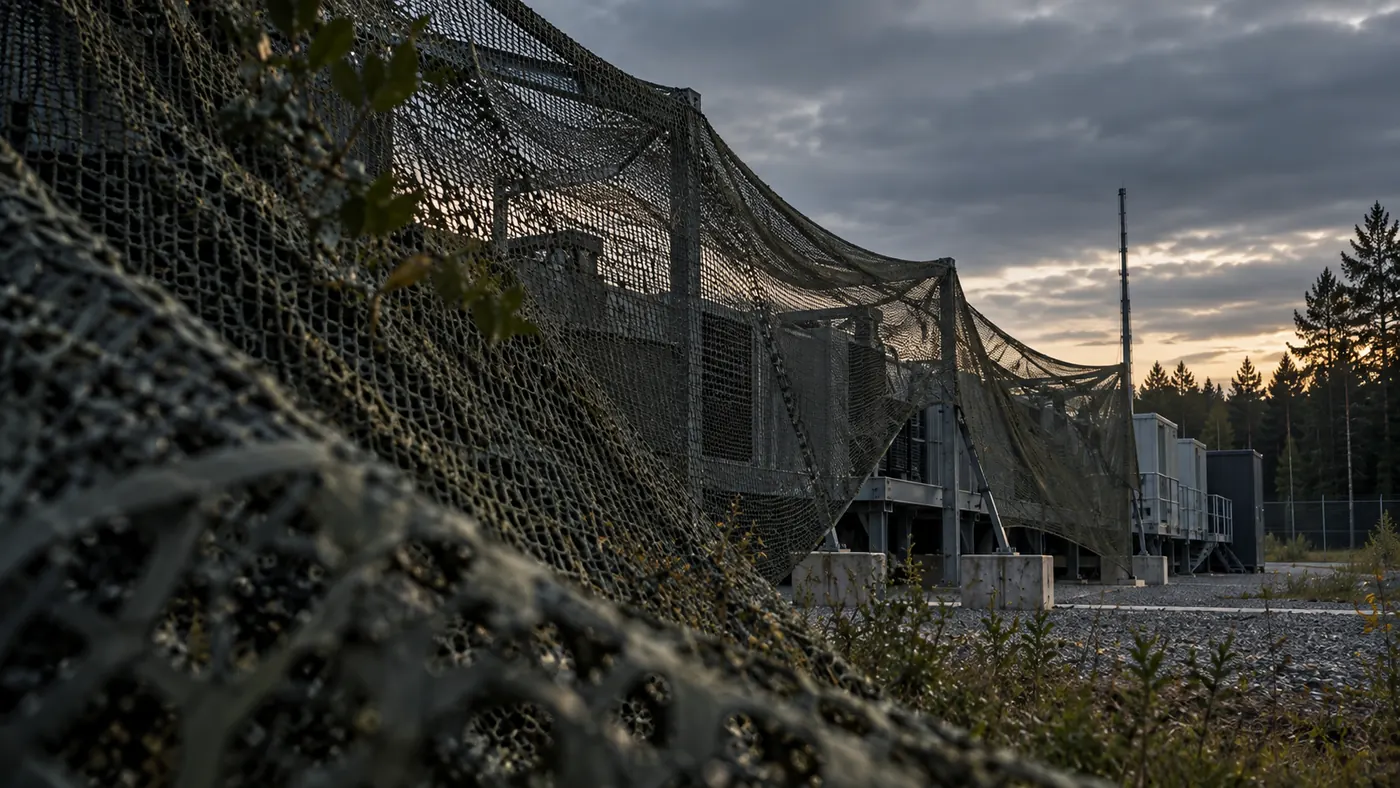
Reduce the signature. Reduce the exposure.
TEC-KNIT develops textile structures for camouflage and application-specific signature management.
VISUAL CAMOUFLAGE
Textile structures for visual camouflage.
INFRARED
Application-specific infrared signature management.
RADAR
Engineered textile structures for radar signature management.
ELECTROMAGNETIC SHIELDING —
BUILT INTO THE TEXTILE.
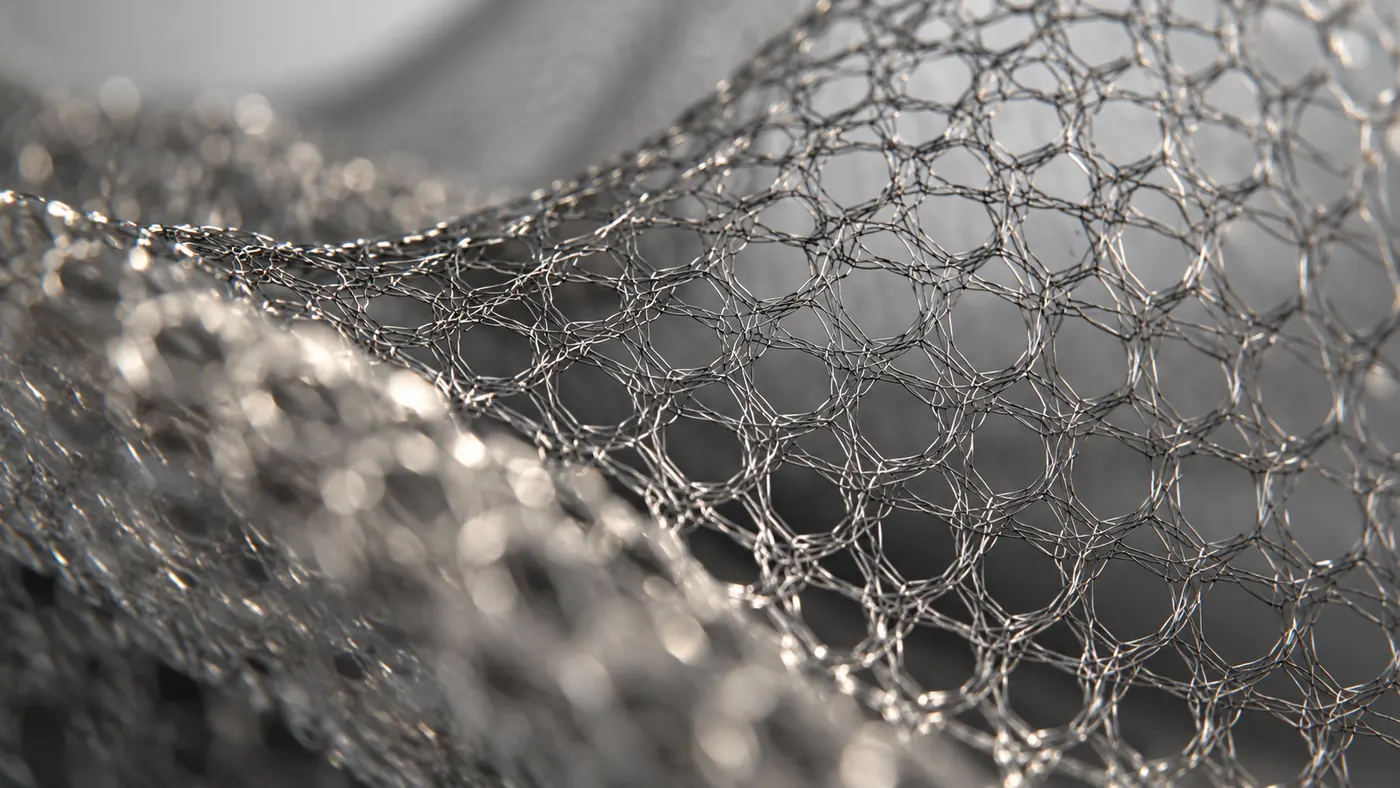
TEC-KNIT develops conductive knitted structures and fine-wire structures for electromagnetic shielding applications.
CONDUCTIVE TEXTILES
Knitted textile structures incorporating conductive components
FINE-WIRE STRUCTURES
Highly specialised knitted structures made from fine metallic wires.
EMI / RF SHIELDING
Engineered around application-specific requirements.
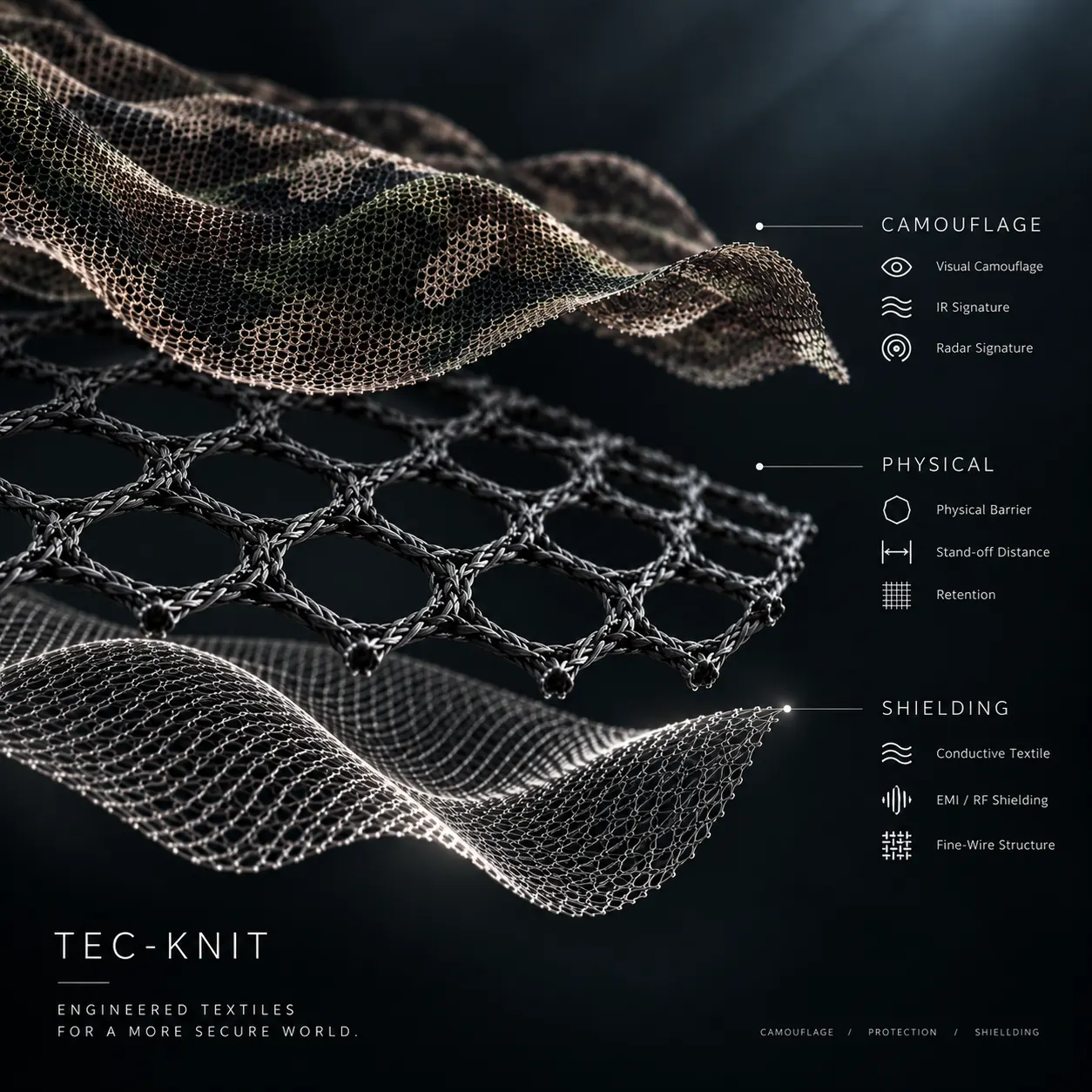
Three textile layers. One protection concept.
Different textile protection functions can be combined in a modular, application-specific architecture.
MODULAR BY DESIGN.
ENGINEERED FOR THE APPLICATION.

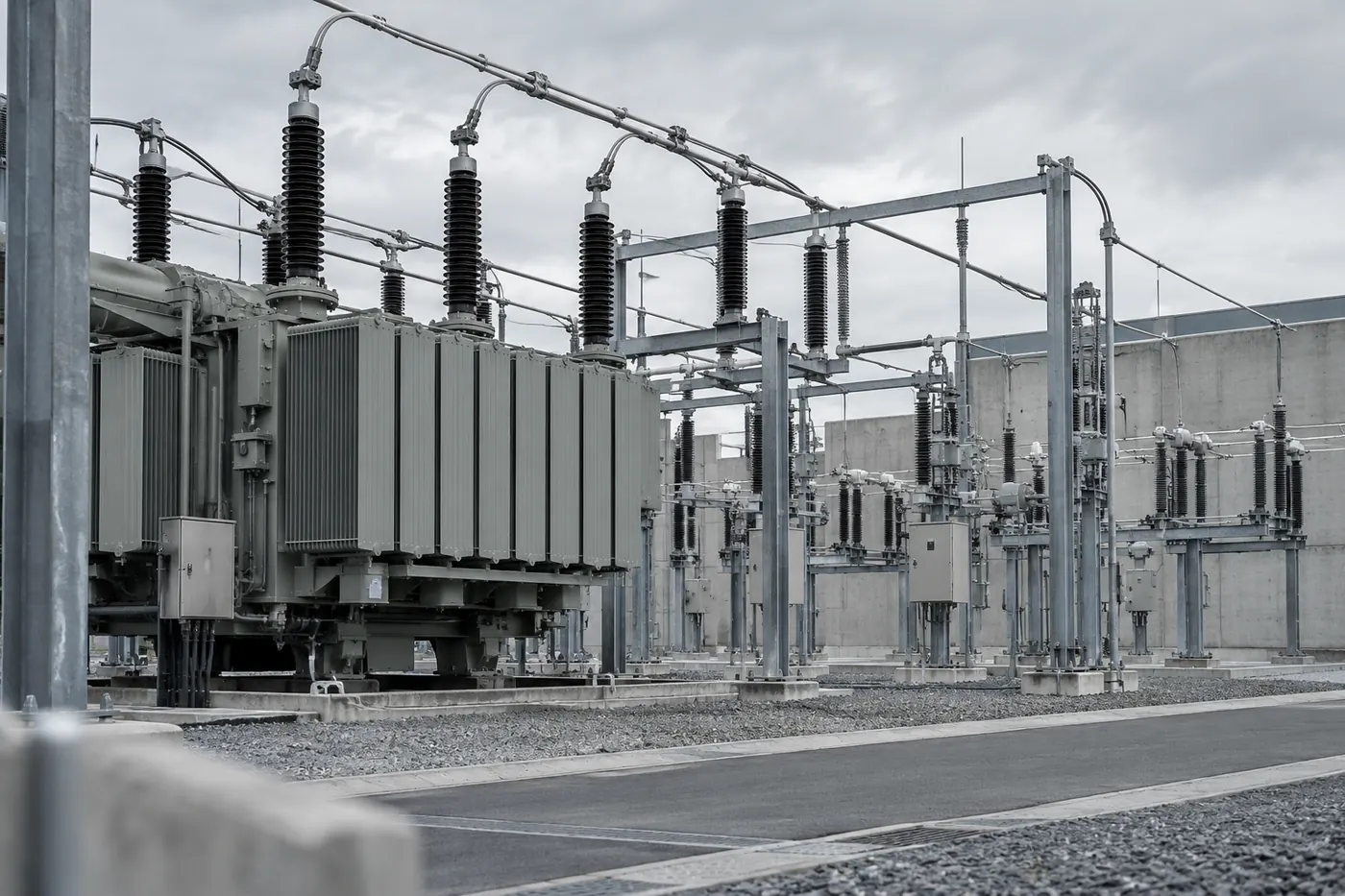
PROTECTION FOR CRITICAL ASSETS.
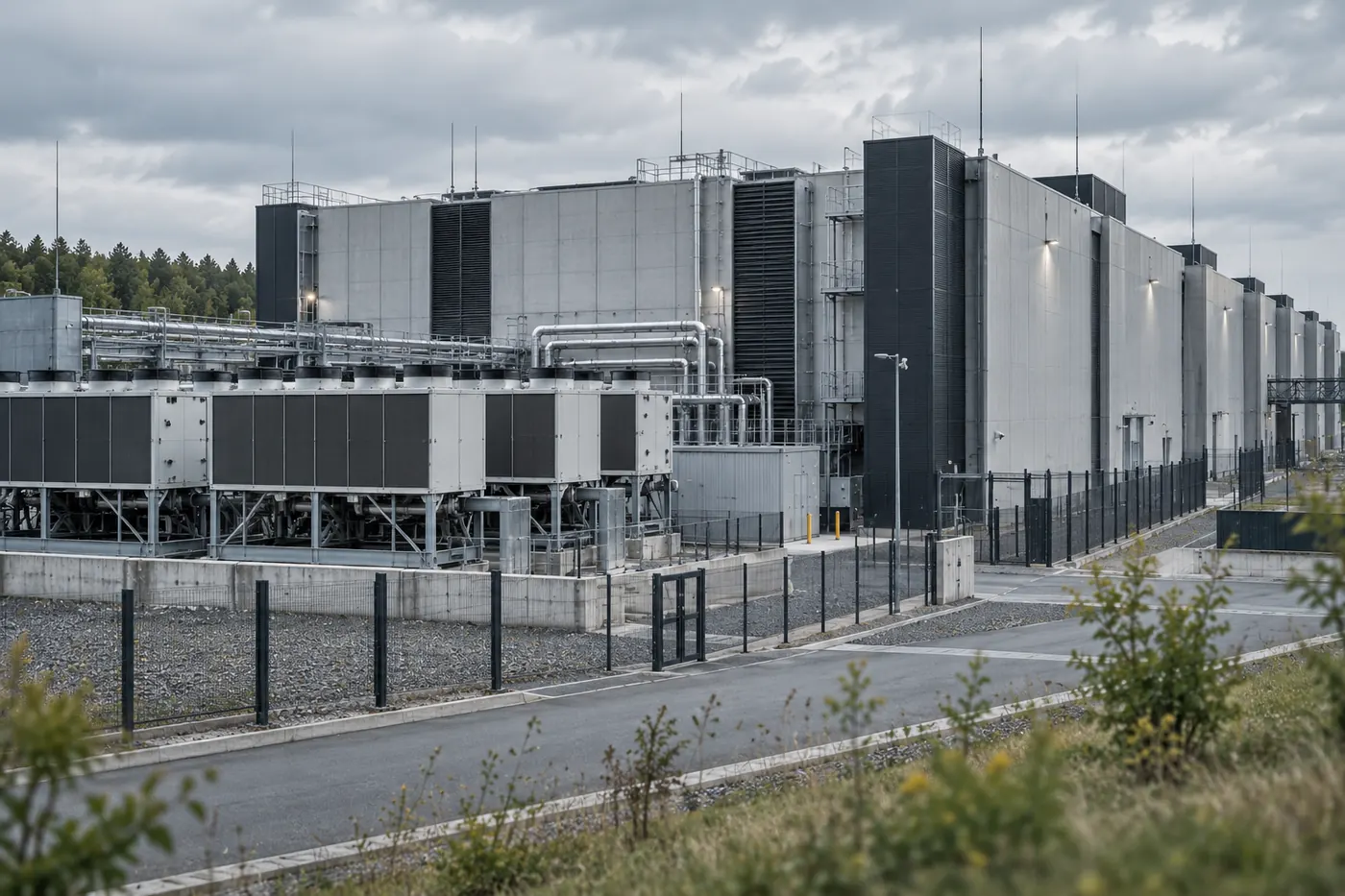
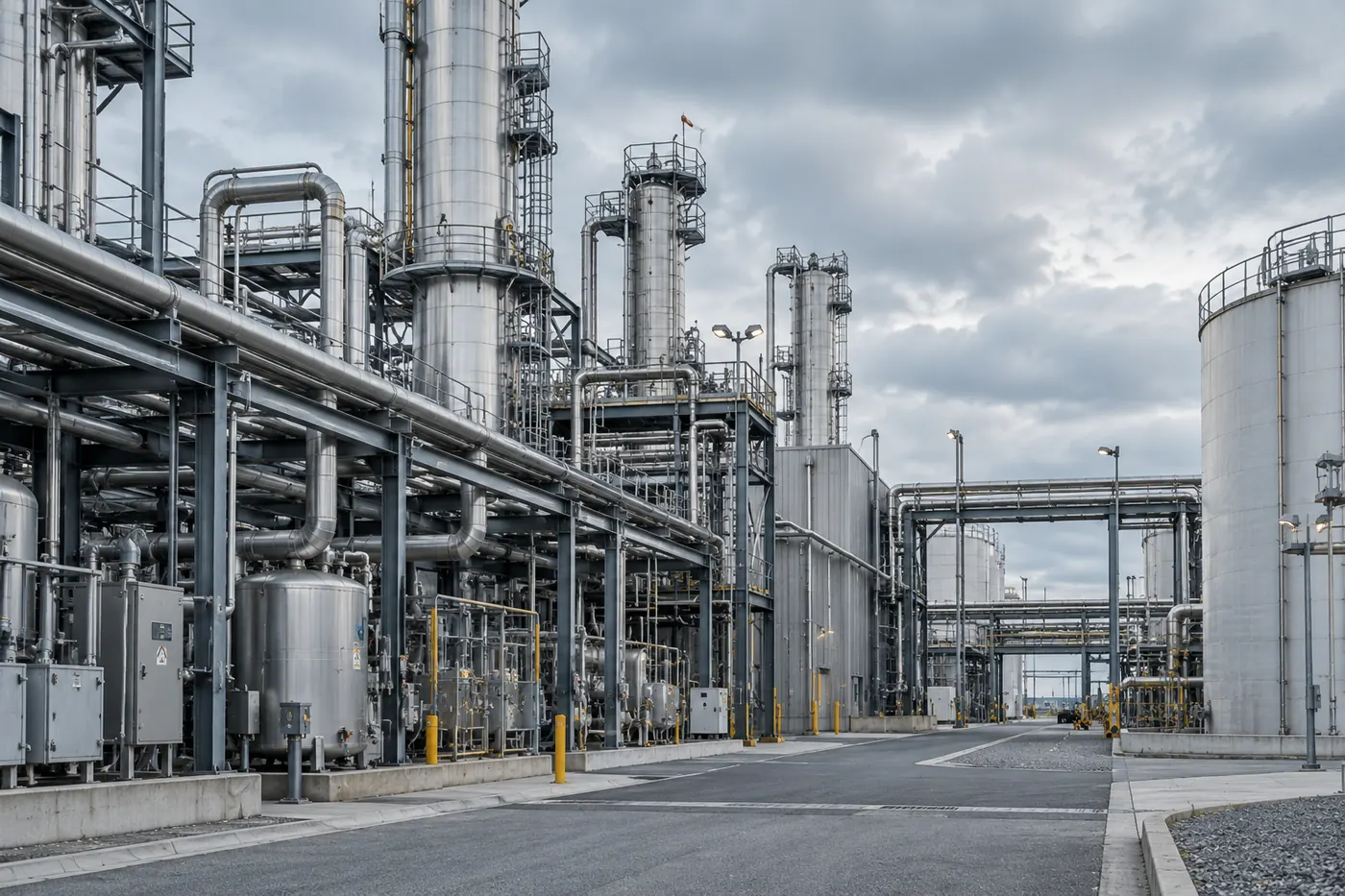
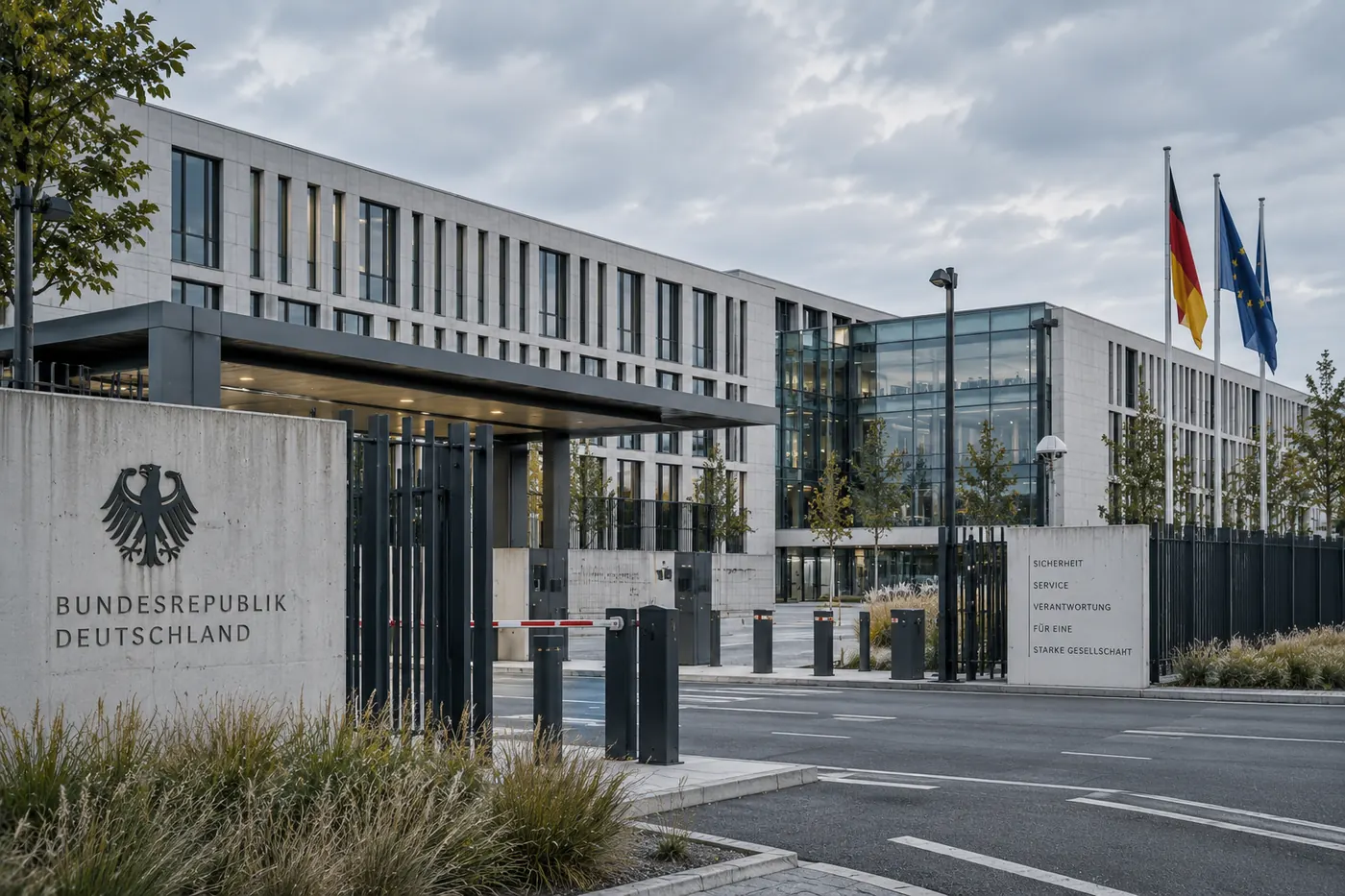
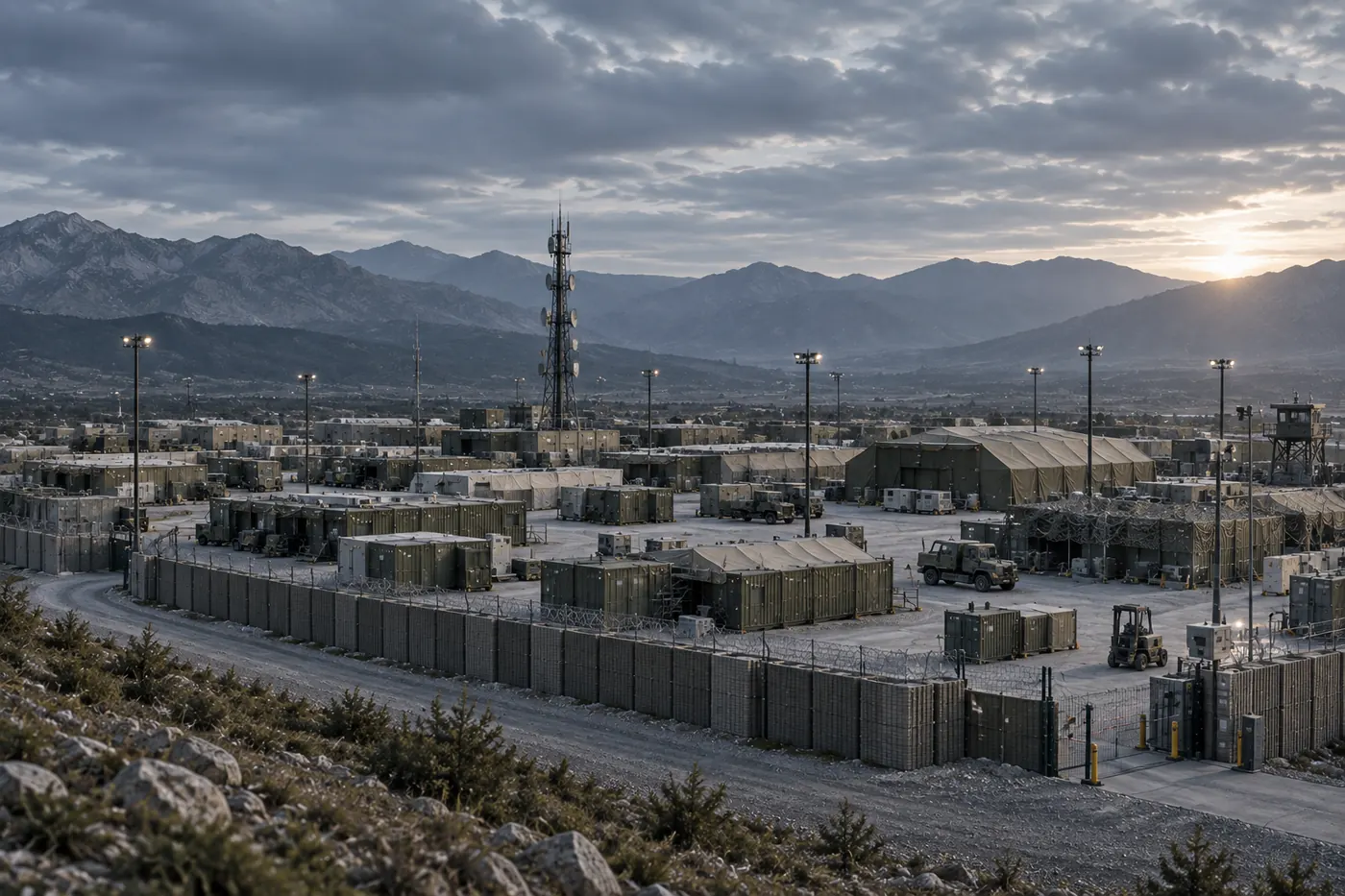
Passive textile protection can be adapted to different
assets, environments and protection requirements.

WE DON'T START WITH A CATALOGUE.
WE START WITH YOUR REQUIREMENT.
TEC-KNIT translates application requirements into engineered textile structures.
UNDERSTAND
Asset · Environment · Requirement
Understand the asset, operating environment and required protection function.
DEFINE
Protection Function · Boundary Conditions
Translate requirements into defined textile functions and technical parameters.
ENGINEER
Material · Geometry · Textile Structure
Engineer materials and textile structures around the defined requirements.
PROTOTYPE
Functional Samples · Iteration
Develop prototypes and refine the textile structure through iterative testing.
VALIDATE
Mechanical · Environmental · Functional
Validate relevant performance against application-specific requirements.
PRODUCE
Industrial Manufacturing · Quality
Transfer the validated solution into controlled and scalable production.
Performance has to be demonstrated
Performance depends on the material, textile structure, environment and application scenario. Relevant functions are validated accordingly.
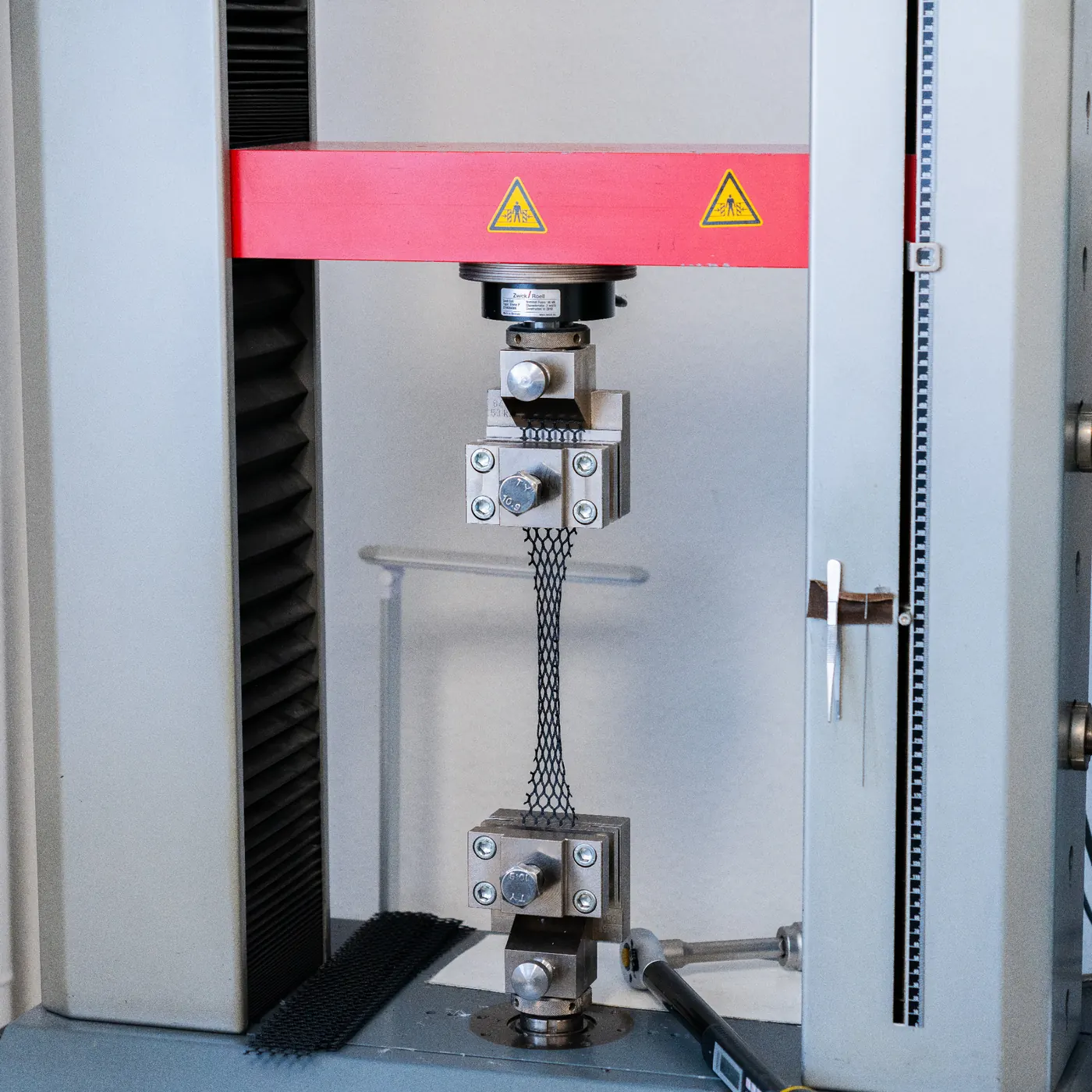
Performance validated the application.
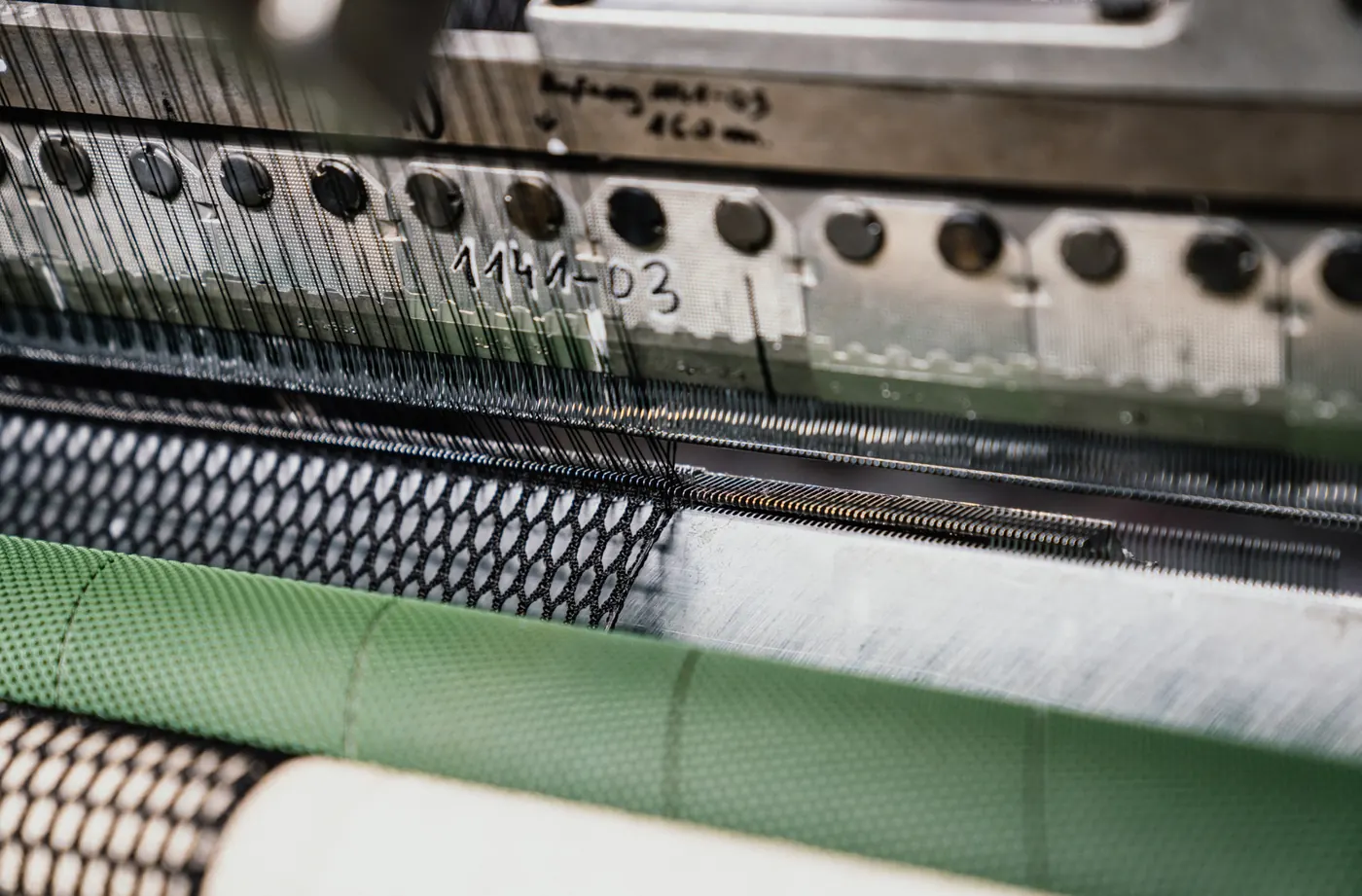
Purpose-built technical textile structures.
EVERY ASSET IS DIFFERENT.
SO IS THE PROTECTION IT REQUIRES.
Talk to our textile engineers about your application, environment and required protection functions.